
Meet Them Where They Are: (Marketing + Sales) x Infinity
So here we are at the finish line. We built a market, drew a sharp picture of our customer, and wrote a message that grabs them. Now for the big one. Actually getting in front of people, and getting them to buy again and again.
Let me start by busting a myth. We love to picture buying as a tidy little line. I have a problem, I search, I compare a few options, I pick one, done. Now be honest for a second and think about how you really bought the last thing that mattered to you. It was nothing like that. You heard about it on a podcast and forgot. You saw it on TikTok during a work break. You texted a friend. You ignored it for a month. You caught a review while half-watching Netflix, then fell down a Reddit rabbit hole, and only then did you buy. Messy. There was a study back in 2019 that found the average American touched a car brand 19 times online and 5 times in person before buying one. That number is only bigger now.
It gets trickier, because your one customer is secretly several people in your records. She’s Sam on one form and Samantha on another. She’s a personal email here and a work email there. She’s a loyalty card in your shop and a newsletter signup online, and your system treats those two as strangers. The average person now carries around ten connected devices. So the loyal regular you’ve had for years can get a cheery “welcome, new customer!” email, which is a little insulting and a lot of wasted money. You can’t fix all of that overnight, but just knowing it’s happening changes how you treat people.
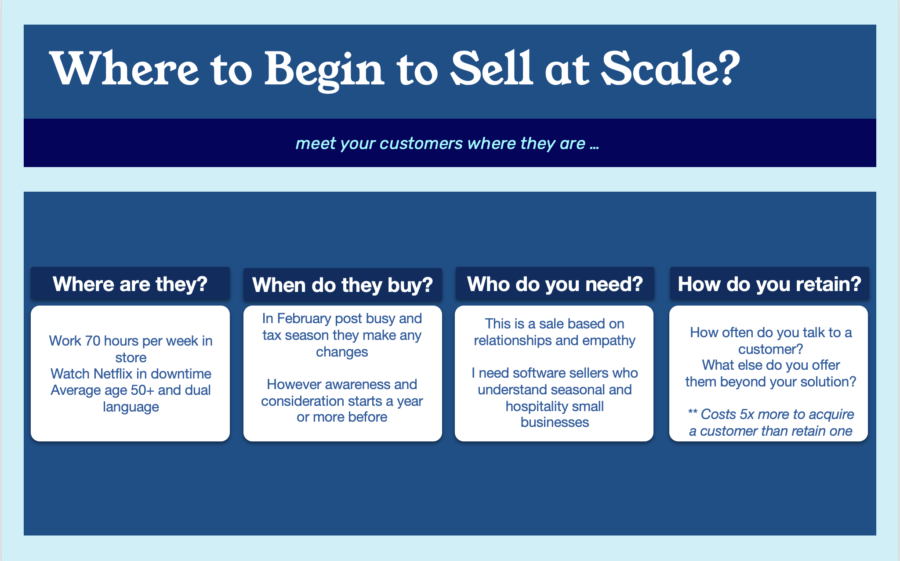
When you do reach out, don’t overthink the channel. Boring old email still earns more per dollar than anything else, and has for twenty years, no matter how many messaging apps come along. Timing matters too. If you know your buyer only makes decisions in one window of the year, pour your energy in there instead of spraying it across all twelve months.
Then there’s pricing, which people forget is marketing. How you price and package is a message all on its own. A few rules I swear by. Price high and discount generously, because it’s far easier to say “$100, half off this month” than to start at $50 and later beg people to accept $100. Offer a basic and a premium version so the choice feels obvious and the fancy one makes the plain one an easy yes. And always charge the most for your time and your expertise. Think none of this works? Netflix raised prices over and over from 2022 to 2025 and cracked down on password sharing, all the stuff we grumbled about, and their revenue and their subscriber count both still climbed about 50%.
What you do next depends on where you are. Brand new? Pick one type of customer, one use case, one channel, and go. Short on time and money? Lean on free channels and let your current customers feed your content and your community. A bit more established? Split your customers into groups, test different messages, run a small event, and double down on whatever works. Rolling in resources? Pour love on your very best customers, make loyalty genuinely worth it, and keep nudging prices up.
And never believe you need a big budget to make noise. The ALS Ice Bucket Challenge raised $115 million from 17 million people on basically no ad spend. You won’t summon lightning like that on command, but a simple, shareable idea inside your own little community can punch way above its weight.
One last thought for this AI moment we’re all living through. When customers hand you their data, they’re really handing you trust, and you pay that back two ways. You follow the rules honestly, and you give them something real in return. An AI helper that solves your problem and then surprises you with a discount stops feeling creepy and starts feeling like a gift. And that little gift, given over and over, is the whole game.
So that’s the series. Find the market, know the customer, craft the message, meet them where they live. Do those four things with a bit of heart and you won’t just make sales, you’ll wow people. And if you’re only joining now, go back to post one and start where every business starts. Small.